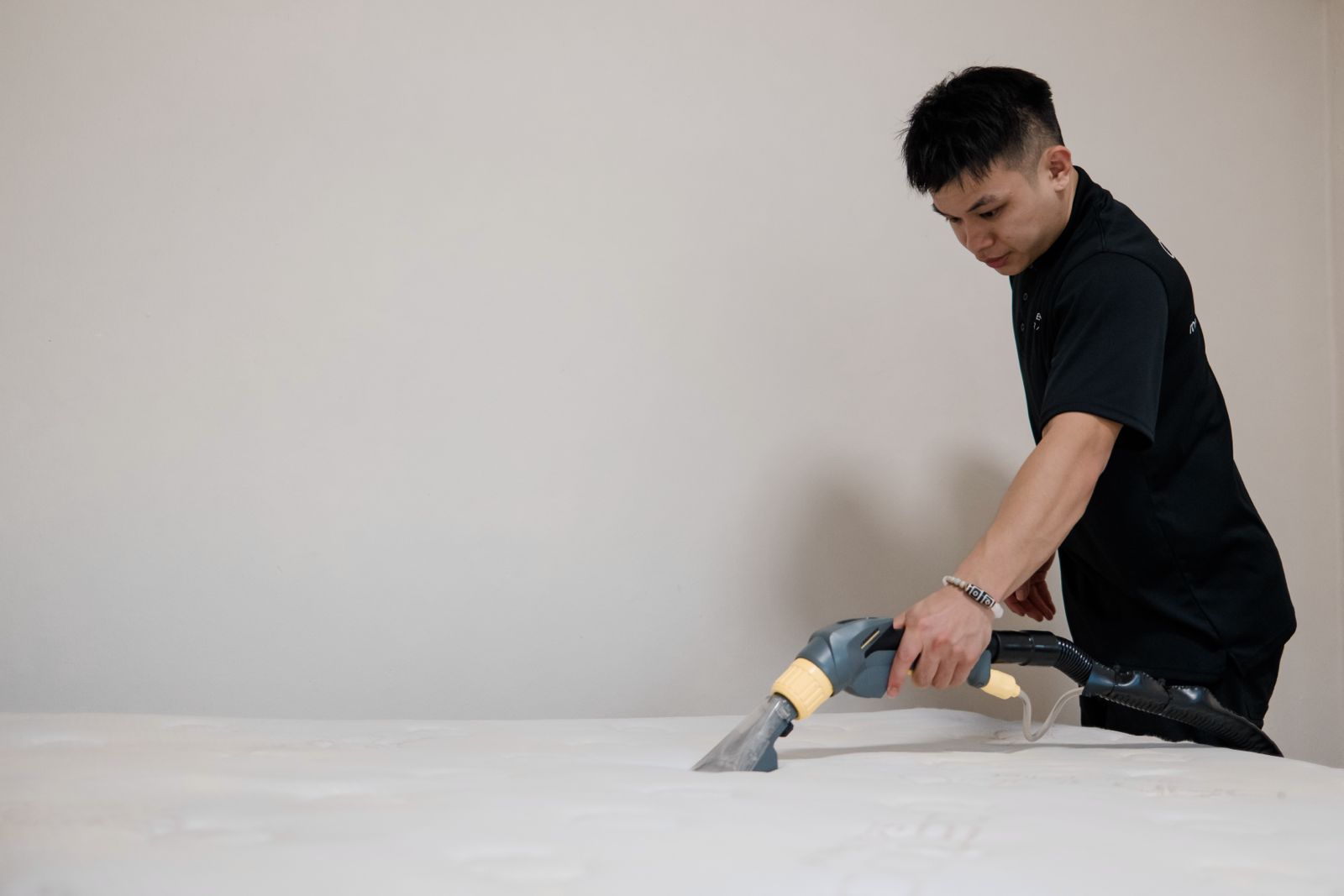
Vacuum your mattress surface every month or two, wash bedding weekly in hot water, and have the mattress professionally sanitised every six to twelve months. In Singapore's humidity, lean towards the more frequent end — and closer to every six months if anyone in the home has allergies, asthma, or is very young.
- Weekly: wash sheets, pillowcases, and protector in hot water.
- Monthly or bi-monthly: vacuum the mattress surface and rotate it.
- Every 6–12 months: professional deep sanitisation.
- Singapore's climate speeds up dust mite and allergen build-up, so err towards more often.
- Allergies, young children, pets, or a spill move the schedule sooner.
Why cleaning frequency matters
A mattress collects sweat, dead skin, and dust every night, and dust mites build up as that debris accumulates. Cleaning is really about staying ahead of that build-up rather than reacting once it becomes a problem you can smell or feel. The right frequency keeps the mattress from ever reaching the state where it affects your sleep or your breathing.
Frequency also protects the mattress itself. Sweat and moisture that sit in the fabric over months encourage staining and, in humid conditions, mould. Regular care keeps the surface sound and the interior drier, so a good mattress lasts closer to its full lifespan. In other words, cleaning on a schedule is cheaper than the alternatives at both ends — fewer allergy problems now, and a mattress you replace later rather than sooner.
There is no single number, because it depends on who sleeps on it and the conditions around it. A useful way to think about it is in layers: light upkeep often, deeper care occasionally.
A simple mattress cleaning schedule
Weekly — wash the bedding
Sheets, pillowcases, and the mattress protector should go through a hot wash weekly. This is the highest-value habit because it removes the layer of skin flakes and allergens closest to you, and heat reduces dust mites in the fabric.
Every month or two — vacuum and rotate
Run the vacuum over the mattress with an upholstery attachment, paying attention to seams and quilted grooves where debris gathers. While the bedding is off, rotate the mattress head-to-toe so it wears evenly. If it is a flippable type, flip it a few times a year.
Every 6–12 months — professional sanitisation
Twice a year to once a year, have the mattress properly sanitised. This is the step that reaches the dust mites, allergens, and moisture the surface vacuum leaves behind — the part home care cannot cover. For most Singapore households this rhythm keeps the mattress genuinely healthy rather than just presentable.
What makes you clean more often
The schedule above is a baseline. Several things push it sooner:
- Allergies or asthma. If a sleeper reacts to dust mites, aim for professional sanitisation every six months to keep the allergen load low.
- Babies and young children. Developing immune systems and more time spent on the bed make more frequent sanitising worthwhile, using a chemical-free method.
- Pets on the bed. Pets add hair, dander, and outdoor dirt, all of which feed the same build-up.
- Eczema or sensitive skin. Cleaner bedding surfaces mean fewer irritants against the skin overnight.
- Spills, accidents, or illness. A spill or a bout of illness is a reason to clean now, not at the next scheduled point.
- Humidity and no air-conditioning. A warmer, more humid bedroom grows dust mites faster.
Why Singapore changes the timing
Most mattress-cleaning advice online is written for temperate climates with a cold, dry winter that naturally slows dust mites for part of the year. Singapore has no such season. Warmth and humidity stay in the dust mite's preferred range all year, so build-up is steady and uninterrupted.
The practical result is simple: where a guide from elsewhere might say sanitise once a year, here the more frequent end of the range is the safer default. If you are unsure, every six months is rarely too often for a local home.
Signs you have left it too long
Beyond the calendar, the mattress will tell you when it needs attention:
- You wake with a blocked nose, sneezing, or itchy eyes that ease as the day goes on
- A stale or musty smell that airing does not fix
- Visible staining or discolouration
- Worsening eczema or skin irritation with no other clear cause
Any of these means it is time for a deep sanitisation regardless of when the last one was.
Different mattresses, different schedules
Who sleeps on the mattress matters more than the mattress type, but a few situations have their own rhythm worth naming:
- The main bedroom. Used every night, so it accumulates fastest. Keep it on the front foot — vacuum monthly, sanitise every six to twelve months.
- Children's and cot mattresses. Young immune systems and long hours on the bed make more frequent, chemical-free sanitising worthwhile. The dry UV-C method suits them because it uses no chemicals.
- Guest room mattresses. Used rarely, so they need less frequent deep cleaning — but sanitise before a stay if it has been sitting unused for a long time, since a still, humid room can encourage mould.
- Elderly or unwell sleepers. Where health is already fragile, keeping the allergen and bacterial load low is worth the extra frequency.
The pattern underneath all of these is the same: match the frequency to how much the mattress is used and how sensitive the person on it is.
What a professional deep clean covers
Our mattress sanitisation uses dry vacuum extraction with UV-C germicidal light. The extraction removes dust mites, allergens, and dead skin from inside the mattress layers, and the UV-C treats bacteria, mould, and viruses. It is a dry process, so there are no chemicals and no drying time, and the bed is usable the same day. Where there is staining or odour, we add wet extraction to lift what is set into the fabric. All solutions are non-toxic and safe around children and pets.
Because sofas and headboards build up on the same schedule, many households sanitise both together — our upholstery cleaning follows the same method for fabric furniture.
Frequently asked questions
How often should I clean my mattress if I have allergies?
Aim for professional sanitisation every six months, keep vacuuming monthly, and wash bedding weekly in hot water. The goal is to keep the dust mite allergen load consistently low rather than let it build and clear it once a year.
Is once a year enough for a mattress?
For a healthy adult in an air-conditioned room, once a year for a deep sanitisation can be enough alongside regular vacuuming and hot bedding washes. For allergy sufferers, children, or homes without air-conditioning, every six months is the safer choice.
Does rotating a mattress actually help?
Rotating does not clean it, but it spreads wear so the mattress keeps its shape and support for longer. Do it every month or two while the bedding is off, and pair it with a surface vacuum.
Can I over-clean a mattress?
You cannot really vacuum too often, but you should avoid soaking it repeatedly at home, because trapped moisture in a humid climate risks mould. This is why professional wet extraction controls the moisture it introduces — it removes what it puts in.
Set a rhythm and stick to it
Weekly bedding wash, monthly vacuum, and a deep sanitisation once or twice a year keeps most Singapore mattresses in good shape. When you are due for the deep clean, message us on WhatsApp for a mattress sanitisation quote, or get in touch and we will help you set the right schedule for your home.