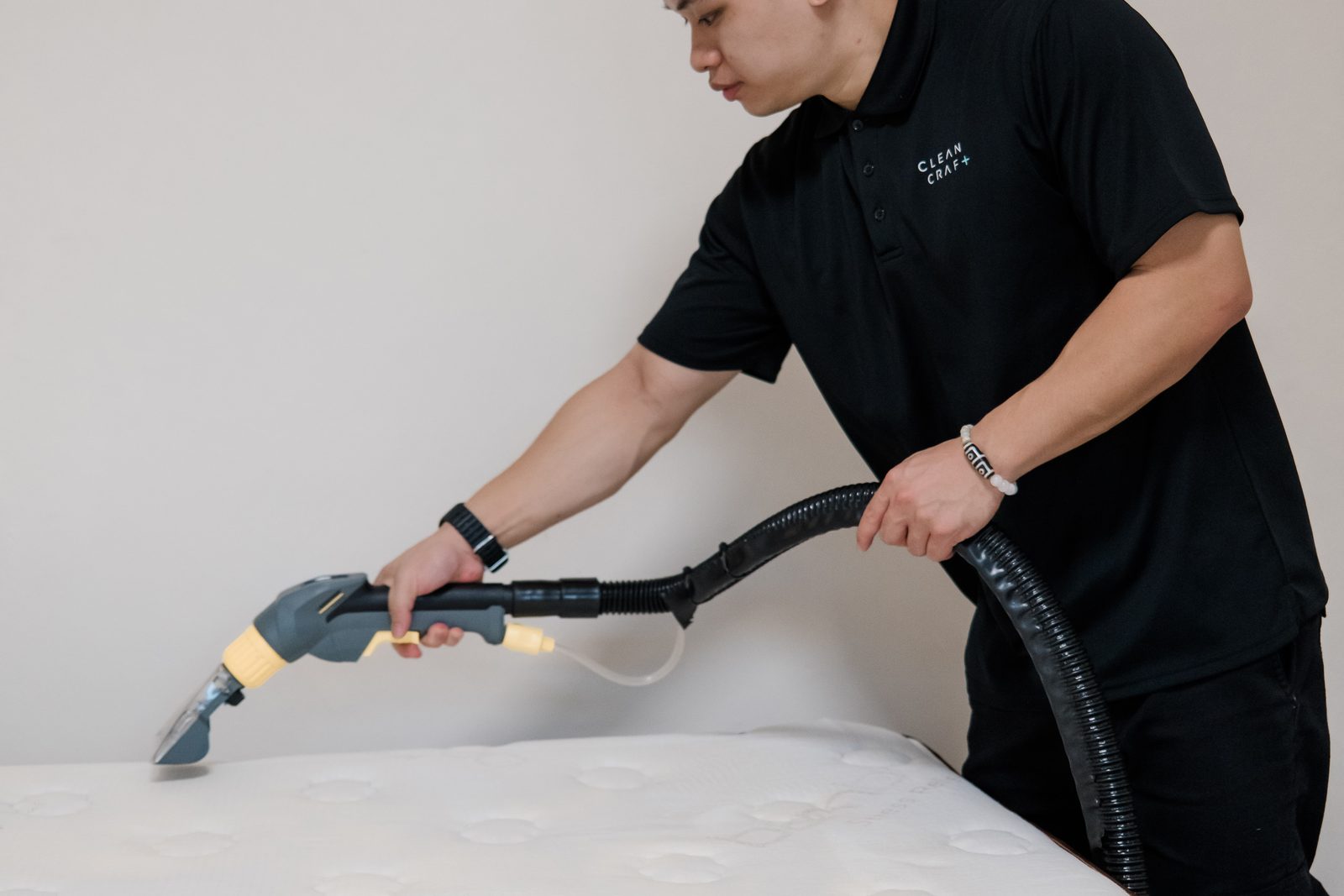
Dust mites in your mattress are not dangerous in the way a pest is — they do not bite or spread disease. The problem is their waste and body fragments, which are a common trigger for allergies, asthma, eczema, and disrupted sleep. To get rid of them you need to reduce humidity, wash bedding hot, vacuum with extraction, and periodically sanitise the mattress properly.
- Dust mites do not bite — the allergens in their droppings and shed bodies cause the reactions.
- Common symptoms: sneezing, blocked nose, itchy eyes, worse asthma, eczema flare-ups, and poor sleep.
- Singapore's warm, humid climate is close to ideal breeding conditions for them.
- Hot-washing bedding, controlling humidity, and vacuuming help; deep colonies need professional extraction.
- Cleancraft's dry vacuum extraction with UV-C sterilisation targets dust mites without chemicals.
What are dust mites, exactly?
Dust mites are microscopic relatives of spiders, far too small to see. They do not feed on you. They feed on the flakes of dead skin that people and pets shed constantly, and a mattress is where the largest amount of that skin collects. Warm, humid, and full of food — a mattress is, from a dust mite's point of view, prime real estate.
A single mattress can host hundreds of thousands of them. That number sounds alarming, but the mites themselves are harmless. It is what they leave behind that matters.
It helps to picture the cycle. You shed skin flakes as you sleep; the mites eat them and multiply; they produce waste; that waste dries, breaks into fine particles, and mixes into the mattress. Every night you top up their food supply, and the colony quietly maintains itself. This is why a mattress you never deep clean does not stay level — the allergen load grows steadily in the background, whether or not you notice any symptoms yet.
Are dust mites actually harmful?
For most people, no — you can share a bed with them for years and feel nothing. The issue is for people whose immune systems react to the proteins in dust mite droppings and decomposed bodies. These proteins become airborne when you move on the bed and you breathe them in through the night.
If you are sensitive to them, the reactions are real:
- Sneezing, a runny or blocked nose, and post-nasal drip, often worst in the morning
- Itchy, red, or watery eyes
- Coughing or wheezing, and worsened asthma
- Eczema and skin irritation flare-ups
- Broken, unrefreshing sleep
Because the exposure happens while you sleep, many people never connect it to the bed. They assume it is a lingering cold or general "sinus." If your symptoms are worse when you wake and ease during the day, the mattress is a likely source.
Why Singapore homes are especially prone
Dust mites thrive in warmth and humidity, and they struggle when the air is dry. Singapore sits in exactly the range they prefer, year round. There is no cold, dry season to slow a colony down the way there is in temperate countries.
Air-conditioning helps a little by lowering humidity in the room, but the inside of a mattress stays warm and holds moisture from body heat and sweat. So even in an air-conditioned bedroom, the mattress itself remains a friendly environment. This is why local homes often need more deliberate management than advice written for cooler climates suggests.
How to get rid of dust mites in your mattress
Control the humidity
Dust mites cannot survive well in dry air. Keeping the bedroom cooler and less humid — with air-conditioning or a dehumidifier — makes the whole room less hospitable to them. This is the single most underrated step.
Wash bedding in hot water
Wash sheets, pillowcases, and the mattress protector weekly in the hottest water the fabric allows. Heat is one of the few things that reliably kills mites in fabric, and it washes away the allergens they have already deposited.
Use a mattress protector
A tightly woven, washable protector puts a barrier between you and the mattress interior. It will not remove an existing colony, but it slows new build-up and is easy to launder.
Vacuum regularly
Vacuuming the mattress surface with an upholstery attachment lifts loose allergen debris. It is worth doing often. Be honest about its limits, though: a household vacuum works on the surface and does not reach the mites and allergens settled deeper in the padding.
Sanitise the mattress professionally
To actually reduce an established colony rather than just tidy the surface, you need extraction force and a way to sanitise what gets disturbed. That is the gap a professional service fills, and it is the step home methods cannot replace.
Where else dust mites hide in the bedroom
The mattress holds the most, but it is not the only reservoir. Dealing with the mattress alone and ignoring the rest lets the colony refill. Worth attention:
- Pillows. Like the mattress, they collect skin flakes and moisture. Wash washable pillows hot, and have non-washable ones sanitised.
- Duvets and blankets. Launder them hot on a regular cycle, not just when they look dirty.
- The headboard and bed frame. Fabric headboards gather dust and allergens the same way a mattress does.
- Soft furnishings nearby. Curtains, rugs, and an upholstered chair in the bedroom all hold allergens and feed the cycle.
Thinking of the bedroom as one system, rather than the mattress in isolation, is what keeps the allergen load down between deep cleans.
How professional sanitisation targets dust mites
Our mattress sanitisation is built for this exact problem. We use dry vacuum extraction with integrated UV-C germicidal light. The extraction pulls dust mites, their droppings, and the dead skin they feed on out of the mattress layers, while the UV-C treats bacteria, mould, and viruses. It is a dry method — no chemicals and no drying time, which matters for anyone with allergies or sensitive skin, and makes it suitable for children's and cot mattresses.
Where a mattress also has staining or odour, we add wet extraction: a pre-treatment spray and high-pressure extraction to lift what is set into the fabric. Every solution we use is non-toxic and safe around children and pets, because the whole point is to make the bed healthier, not swap one irritant for another.
Fabric sofas and headboards hold dust mites too, so if the mattress is a problem the surrounding furniture often is as well — our upholstery cleaning uses the same approach.
Frequently asked questions
Do dust mites bite?
No. Dust mites do not bite or burrow into skin. If you have bite marks, look at bed bugs or mosquitoes instead. Dust mite reactions are allergic — sneezing, congestion, itchy eyes, and skin or asthma flare-ups — not bites.
Can I get rid of dust mites completely?
Realistically you manage them rather than eliminate them forever, because they exist wherever there is warmth, humidity, and skin flakes. But you can cut their numbers and the allergen load dramatically with humidity control, hot washing, and periodic professional sanitisation.
How often should I sanitise my mattress for dust mites?
For most homes, every six to twelve months is a sensible rhythm. For allergy or asthma sufferers, or homes with young children, closer to every six months keeps the allergen load down.
Does UV-C light kill dust mites?
UV-C is a germicidal light that treats bacteria, mould, and viruses on the surface it reaches. In our service it works alongside dry vacuum extraction, which is what physically removes the dust mites and their debris from inside the mattress. The two steps do different jobs.
Sleep on a mattress that is not working against you
If mornings bring a blocked nose and itchy eyes, your mattress is worth a proper look. Message us on WhatsApp for a mattress sanitisation quote, or contact us with your mattress size and any symptoms — we will match the right method to the problem.