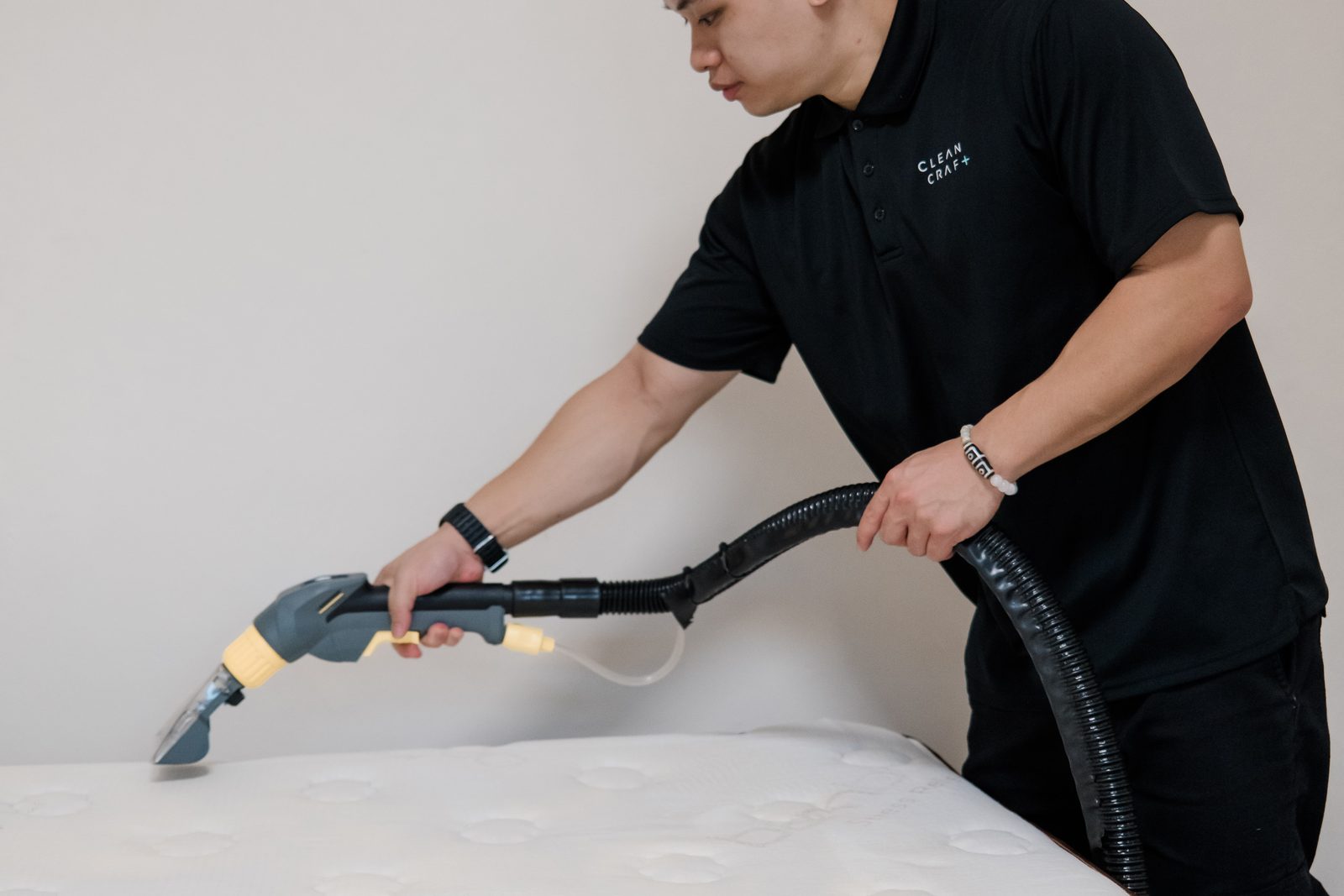
If your mattress is structurally fine but dirty, stained, smelly, or triggering allergies, cleaning solves the problem at a fraction of the cost of replacing it. Replace it only when the structure has failed — permanent sagging, broken support, or damage that no cleaning can reverse. Most of the time, the issue is hygiene, and hygiene is fixable.
- Cleaning fixes hygiene problems: dust mites, allergens, stains, odours, and general grime.
- Replacement is for structural failure: sagging, broken springs, lost support, or physical damage.
- A dirty mattress is not a worn-out mattress — the two get confused often.
- Professional sanitisation costs far less than a new mattress and extends the life of a good one.
- If in doubt, sanitise first — you can always replace later, but you cannot un-spend on a new bed.
The question behind the question
When people ask whether to clean or replace a mattress, they usually have one real concern: is this mattress still healthy to sleep on? A stain, a smell, or a run of bad allergy mornings makes replacement feel like the safe reset. But those are hygiene symptoms, and hygiene does not require a new mattress — it requires the mattress to be properly cleaned.
The genuine case for replacement is different. It is about whether the mattress still does its physical job of supporting your body. That is what wears out, and that is what cleaning cannot restore.
Keeping those two ideas apart saves a lot of money. People replace perfectly good mattresses because of a stain or an allergy season, and people persist with collapsed mattresses because they were "only cleaned last year." Neither is the right read. The test is simple: hygiene problems are cleaned, structural problems are replaced. The rest of this guide is really just applying that one line.
When cleaning is the right call
Cleaning is the answer when the mattress is sound underneath but the surface and interior have become dirty. That covers most complaints:
- Dust mite build-up causing sneezing, congestion, or worse asthma
- Sweat stains, yellowing, or set-in marks
- A stale or musty smell
- Post-illness sanitising
- General accumulation on a mattress that has never been deep cleaned
In all of these, the mattress still supports you well. What has changed is what has collected in it, and that is precisely what professional sanitisation removes.
When replacement is genuinely necessary
Some problems are structural, and no amount of cleaning brings the mattress back. Replace it when you see:
- A permanent dip or sag that stays after you get up
- Springs you can feel or hear, or a coil poking through
- Waking with back or neck pain that improves when you sleep elsewhere
- Visible lumps, broken-down foam, or a mattress well past its expected lifespan
- Physical damage such as tears or water damage that reached the core
These are signs the mattress has stopped doing its job. Cleaning a sagging mattress leaves you with a clean sagging mattress. At that point, a new one is the right spend.
Mattress cleaning vs replacement, side by side
| Consideration | Professional cleaning | Replacement |
|---|---|---|
| Best for | Dust mites, allergens, stains, odours, hygiene | Sagging, broken support, structural damage |
| Fixes the actual problem when it is… | Dirt and build-up on a sound mattress | Worn-out or failed structure |
| Relative cost | A fraction of a new mattress | Full cost of a new mattress |
| Disruption | Done at home, same-day use with dry method | Delivery, disposal of the old mattress, setup |
| Environmental impact | Keeps a usable mattress in service | Adds a bulky item to disposal |
| Restores support and comfort? | No — cannot fix structure | Yes |
| Removes allergens and dust mites? | Yes | Yes, but a new mattress builds them up again over time |
The table makes the split clear. Cleaning and replacement solve different problems. Buying a new mattress to fix an allergy issue works only until the new one accumulates the same dust mites — which it will, without regular sanitising.
How to tell which one you need
Run a quick check. Lie on the mattress and ask whether it still supports you evenly, with no dip and no pressure points. If the support is fine and the complaint is about cleanliness, smell, stains, or allergies, cleaning is your answer. If the support has gone — you sink, you ache, you feel the springs — replacement is the honest choice.
When it is genuinely unclear, sanitise first. It is the lower-cost move, it resolves most complaints, and it gives you a clean baseline to judge the mattress on. If the problem was structural all along, you will know quickly and can replace it then.
The cost and hassle nobody mentions
Replacement carries costs beyond the price tag, and they are easy to overlook when a stain has you frustrated. A new mattress means choosing and buying one, arranging delivery, and disposing of the old mattress — a bulky item that is not simple to get rid of in Singapore. There is the risk, too, that the new mattress does not feel like the old one you were used to.
Cleaning avoids all of that. It is done at home, the mattress you already like stays, and with the dry method you are back on it the same day. There is also the environmental side: a usable mattress sent for disposal is a large item added to the waste stream, when sanitising would have kept it in service. For a mattress that is structurally fine, cleaning is the lower-cost, lower-hassle, and more sustainable choice on every count.
What professional sanitisation does for a mattress worth keeping
Our mattress sanitisation uses dry vacuum extraction with UV-C germicidal light to pull out dust mites, allergens, and dead skin and to treat bacteria, mould, and viruses — with no chemicals and no drying time. For stains and odours we add wet extraction, using a pre-treatment spray and high-pressure extraction to lift what is set into the fabric. The solutions are non-toxic and safe around children and pets. On a mattress that is still structurally sound, this restores the hygiene without the cost and hassle of buying new.
If you are refreshing the bed, the sofa and headboard usually deserve the same attention — our upholstery cleaning covers fabric furniture with the same method.
Frequently asked questions
Can cleaning remove old urine or sweat stains from a mattress?
Often yes. Wet extraction with a pre-treatment spray lifts many set-in organic stains and the odours that come with them. Very old or deeply soaked stains may not fully disappear, but sanitising still removes the bacteria and smell even when a faint mark remains.
Will cleaning make a sagging mattress firm again?
No. Sagging is structural, and cleaning does not restore support. If the mattress dips or you wake with back pain, that is a replacement issue, not a cleaning one.
Is it worth cleaning an old mattress?
If it still supports you well, yes — cleaning extends the life of a good mattress and is far cheaper than replacing it. If the structure has failed, cleaning will not help and replacement is the better spend.
How much cheaper is cleaning than replacing?
Professional sanitisation costs a fraction of a new mattress. Pricing depends on the mattress size and the method needed, so message us on WhatsApp for a quote — but as a rule, cleaning a sound mattress is the far more economical choice.
Not sure? Start with a clean
If the mattress still supports you, cleaning almost always solves the problem for far less than replacing it. Message us on WhatsApp for a mattress sanitisation quote, or contact us with your mattress size and what is bothering you, and we will tell you honestly whether sanitising will fix it.