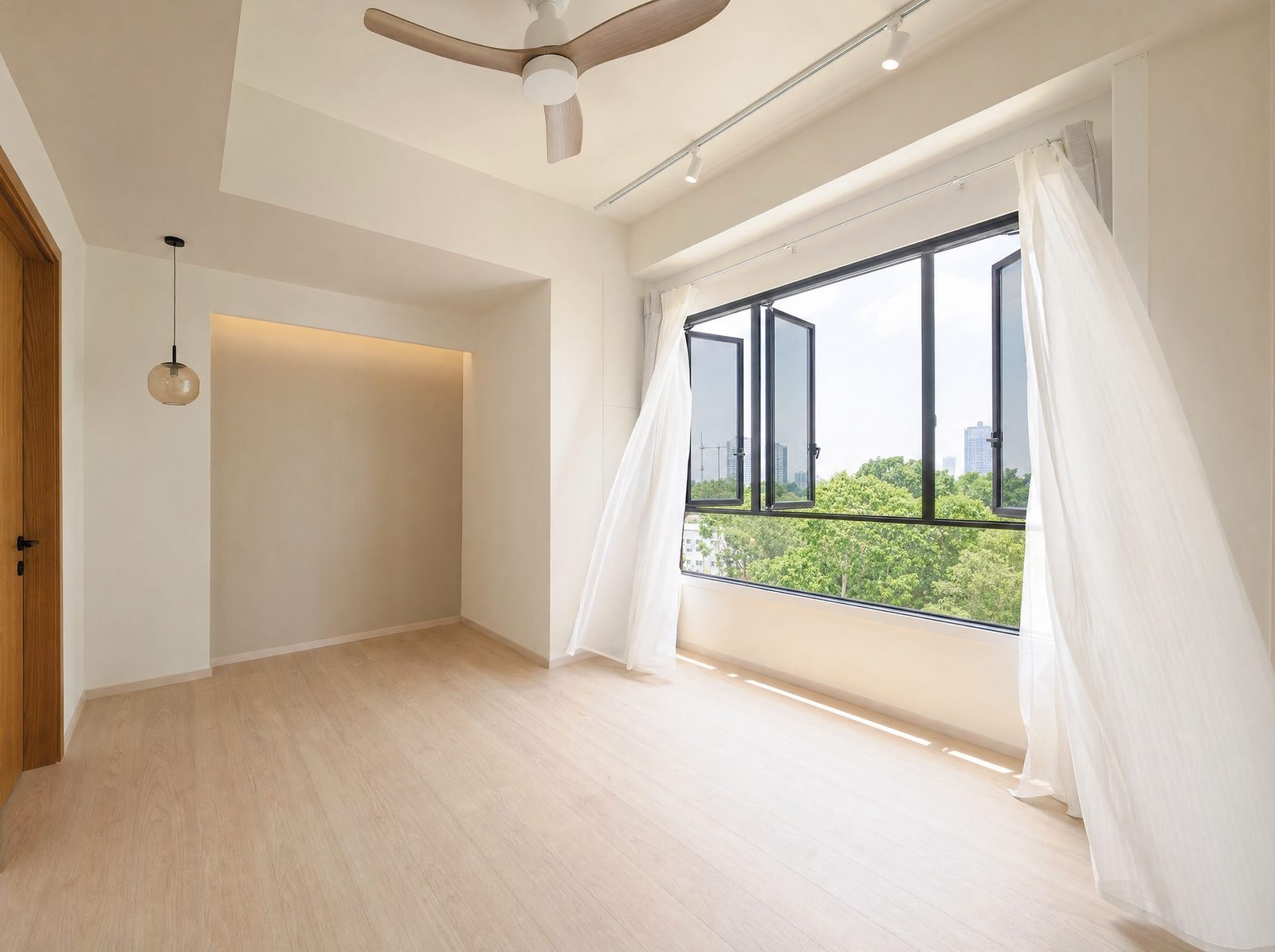
New cabinetry, flooring, adhesives and furniture release formaldehyde into the air, and levels are highest in the first months after a renovation. Cleancraft takes a reading before treatment, uses high-pressure spray equipment to apply an even coating across furniture surfaces that neutralises formaldehyde, then takes a second reading and shares both with you.
Where does formaldehyde in a new home come from?
Formaldehyde is a chemical used in many building and furnishing materials, including the resins and glues in engineered wood. In a newly renovated home, the usual sources are:
- new built-in cabinetry and wardrobes
- new flooring
- the adhesives used to install them
- new loose furniture
These materials release formaldehyde into the air over time, a process called off-gassing. It’s one reason a freshly renovated flat can carry a sharp chemical smell.
When are formaldehyde levels highest after a renovation?
Off-gassing is highest in the first months after new carpentry or flooring goes in, and it eases as the materials age. How much you get depends on how much new material went in. A full carpentry package gives off more than a single new wardrobe.
That timing matters because the first months are usually when a household moves in, sets up a nursery or has older parents come to stay.
How is formaldehyde measured in a home?
We take a reading in your home before we treat anything. That gives a baseline for your own space, which tells you more than a general assumption about renovated flats.
After the treatment, we take a second reading and share both with you. The value is in the comparison: the same home, before and after, so the result is something you can see rather than take on trust.
What does formaldehyde treatment actually do?
The treatment is applied with high-pressure spray equipment, which lays an even coating across furniture surfaces such as cabinetry, wardrobes and built-ins. The coating is there to neutralise formaldehyde coming off those surfaces.
The coating we use is imported from Japan, chosen for its quality and reliability. Like the rest of our work, the method is non-toxic and child- and pet-safe.
It is a treatment for the air, so it doesn’t clear renovation dust or residue. That is a separate job, and it should come first.
How does formaldehyde treatment compare with post-renovation cleaning?
| Post-renovation cleaning | Formaldehyde treatment | |
|---|---|---|
| Deals with | Fine renovation dust, adhesive residue, paint specks, cement haze and grout film | Formaldehyde off-gassing from cabinetry, flooring, adhesives and furniture |
| How it’s done | Top to bottom: clear, dust down, wipe through, extract, final walkthrough | Reading taken, even spray coating across furniture surfaces, second reading taken |
| What you get to check | A walkthrough of the unit with you before we leave | Before-and-after readings, shared with you |
| When | Once all works are complete, ideally before furniture arrives | After the dust clean |
| Pricing | By floor area | By unit size, quoted separately as an add-on |
Should you do the post-renovation clean first?
Yes. Renovation dust is fine and settles on every surface, including the cabinetry the treatment is applied to. Clearing it first means the coating goes onto clean surfaces rather than onto a layer of dust.
Our post-renovation cleaning works top to bottom so the dust doesn’t resettle. Book it once all works are finished, including hacking, tiling, painting and carpentry touch-ups. Formaldehyde treatment and floor scrubbing are quoted separately as add-ons, so you can arrange them in the same booking.
Who should consider formaldehyde treatment?
It depends on how much new cabinetry and flooring went in, and on who lives in the home. It’s worth doing if the household includes:
- young children
- elderly family members
- anyone with respiratory sensitivity, or anyone sensitive to indoor air quality
For a small refresh with one new piece, keeping the windows open may be enough. For a full carpentry package with a baby on the way, before-and-after readings give you something concrete to go on. If you’re unsure which side of that line you’re on, tell us your floor area and renovation date and we’ll talk it through.
A new mattress off-gasses too. If one is arriving with the new furniture, a mattress sanitisation before first use is worth adding to the same visit.
Frequently asked questions
Do you measure formaldehyde before and after treatment?
Yes. We take a reading before treatment and another after, and share both with you so you can see the change in your own home.
How soon after renovation should I book formaldehyde treatment?
Once all renovation works are complete and the post-renovation dust clean is done. Off-gassing is highest in the first months after new carpentry or flooring goes in, so sooner is more useful than later.
Is formaldehyde treatment safe for children and pets?
Yes. Our methods are non-toxic and child- and pet-safe. Cleancraft is an NEA-licensed cleaning and sanitisation specialist, licence NEA 200592/1584Z/N01.
How much does formaldehyde treatment cost in Singapore?
It is priced by unit size. Indicative rates are on our formaldehyde treatment page, and we confirm the final quote on WhatsApp once we know your floor area and renovation date.
Ready to plan the move-in?
Tell us your floor area and when the works finished, and we’ll quote the dust clean and the formaldehyde treatment together. We’re an NEA-licensed specialist, owner-operated by Joel and Vanessa for around ten years. Read more about us or browse the blog.